


Fiskerorganisert omsetning i sildesektoren i over 90 år
Rott dere sammen! – eller som de sa det i 1927: Rot jer sammen! Dette var slagordet som samlet de første sildefiskerne på Sunnmøre og som organiserte det som ble hetende Storsildelaget for førstehåndsomsetning av sild nord for Stadt. Storsildlaget ble allerede i 1928 fulgt opp av Stor- og Vårsildelaget sør for Stadt. Dette var starten. Gjennom et fiskerorganisert salgslag ville fiskerne stå sterkere når lett bedervelig vare skulle selges. Vi var i slutten av de harde 1920-årene, med særdeles lave sildepriser. Dette lærte fiskerne hvor følbart svakt utgangspunktet var når fisken skulle finne en kjøper og prisen skulle forhandles.
Internasjonalt samvirke
Initiativet på Sunnmøre i 1927 har mange likhetspunkter med den første internasjonale samvirketanken der nettopp samholdstanken skal tjene medlemmene. Det første moderne samvirkeforetaket ble etablert av noen vevere i England i 1844. Målet var gjennom en innkjøpsforening å sikre varer av god kvalitet til riktig pris, - uten å være prisgitt kjøpmennene. Likhetspunktene til fiskernes kår og deres behov for å stå sterkere i 1927, trenger vi ikke stor fantasi for å se. Etter at Samvirkeloven kom i 2008 er fiskesalgslagene i Norge nå definert som samvirkelag.
Idéen slo for fiskernes del rot. Flere salgslag fulgte i årene etter, også i hvitfisksektoren. Myndighetene skjønte fort at dette var samfunnsnyttig og vi fikk allerede bare noen få år etterpå, den første lovregulering av salgslagenes virksomhet.
Et velfungerende system
I mer enn 90 år har systemet fungert i Norge på en enestående måte, en måte som så å si hele kloden kommer hit for å ta lærdom av, siden salgslagene også utgjør en nøkkelfunksjon i kontroll og fiskeriforvaltning. Råfiskloven regjerte lenge, stundom til protester, men ble for ikke lenge siden erstattet av Fiskesalgslagsloven som fortsatt regulerer fiskesalgslagene og måten de opererer på. I pelagisk* sektor ble de ulike salgslagene etterhvert slått sammen, og senest i 1989 så Norges Sildesalgslag dagens lys. Laget er fortsatt det eneste landsomfattende salgslaget.
Unik salgsform
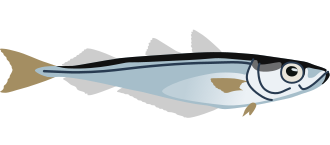
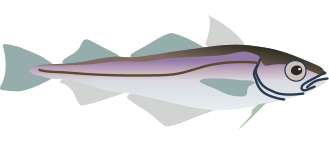
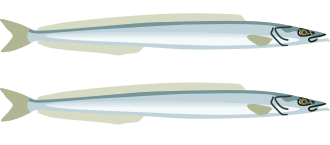
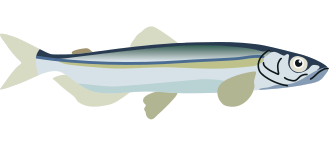
Den pelagiske fisken fra norske fiskere - og fra noen utenlandske, selges via Sildelagets elektroniske auksjon. Årlig omsettes rundt 1,5 millioner tonn fisk til en førstehåndsverdi av mellom 7 og 8 milliarder kroner.
Pelagisk fisk er en viktig del av den globale matseddelen, og bidraget fra Norge utgjør globalt, ca. 10 millioner pelagiske fiskemåltider hver eneste dag. I tillegg kommer annen norsk sjømat som samlet utgjør en eksportverdi innpå 100 milliarder kroner.
• Pelagisk fisk = fiskeslag som beveger seg fritt i havene; sild, makrell, lodde o.a.