





The course of the fisheries per week 2 - 2026
 Photo: Norges Sildesalgslag/Helge Skavlan
A great week for herring up north. And a few catches from foreign vessels.
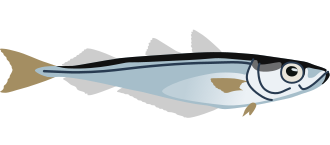
12.01.2026 09:17 | By Martine KorsøenNVG Herring:
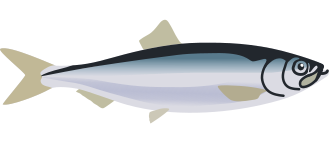
It was a very good herring week in the north, with a total of 44,500 tonnes reported from 87 different vessels. The best catching day was Saturday, when we recorded as much as 11,100 tonnes in the reporting journal. As expected, the coastal fleet has contributed the most. They have caught 22,900 tonnes, purse seine vessels 19,500 tonnes, and from two trawlers we have 1,900 tonnes.
For the smallest vessels in the coastal group that depend on a carrier boat in the north, the winter season is now finished. There have been 9 different carrier assignments, transporting a total of 7,700 tonnes to various buyers along the coast.
Fishing in the north has taken place in two main areas. One area is Kvænangen, where herring has been present and fishing has taken place since October. Before the weekend, the herring changed its “schooling pattern,” spreading out and staying deep throughout the day, making it difficult to catch with purse seine.
The entire herring fleet therefore moved to the areas outside Alta, where the purse seine vessels have been fishing all week, as they were not allowed to operate inside the fjord lines in Kvænangen. In this area there has been good availability, with the herring rising in the twilight. Here, purse-seine hauls of over 2,000 tonnes have been taken. The challenge has been varying sizes.
Average weights in the catches vary from 200 g at the lowest to 319 g at the highest. The weighted average for the week’s volume is 272 grams.
Further south along the coast, 900 tonnes have been caught by coastal vessels operating locally in Lofoten, Helgeland, Hitra and Møre. Here the size varies from 220–390 grams.
We now expect the herring to soon begin moving out of its overwintering areas and start its southbound spawning migration. We hope it becomes accessible for purse seine vessels, and that the larger herring leads the way, enabling fishing on the sizes that are most attractive in the markets.
There will be strong participation in this fishery throughout January.
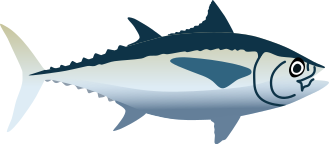
Mackerel:
The foreign mackerel vessels started their mackerel fishery just after New Year. Last week, we had deliveries in Norway from Voyager and Serene. Together they have caught 2,600 tonnes.
The mackerel fishery has taken place west of Shetland, and the catches have been taken with pelagic trawl. The size is around 450 g on average. Buyers report good quality on the fish.
We expect significantly lower volumes of mackerel for Norwegian buyers this winter. This is due to considerably lower quotas, and the Scottish authorities requiring vessels to land 70% of their quota to their own domestic industry.
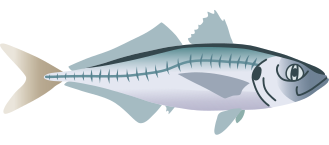
Horse Mackerel (Hestmakrell):
The “regular” boats that fish horse mackerel have also been searching for this elusive fish in the New Year. From four vessels, just under 75 tonnes have been reported.
These catches have been taken in fjords in Rogaland, Vestland and Møre.
The horse mackerel in Møre is extremely large, with an average weight of 700 g, while the size is around 500 g in the other areas.
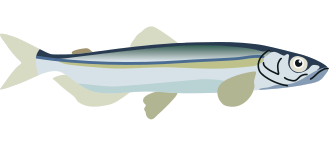
Sprat (Brisling):
Many vessels from Sweden and Denmark have been fishing sprat in the Baltic Sea in the New Year. From the vessels Astrid Marie and Themis, we have a total of 3,300 tonnes reported for delivery in Egersund for meal/oil processing.
Fishermen report good concentrations of sprat west of Estonia, where they have filled their vessels in just a few days of fishing.
Bergen, 12 January 2026
Kenneth Garvik
[email protected]